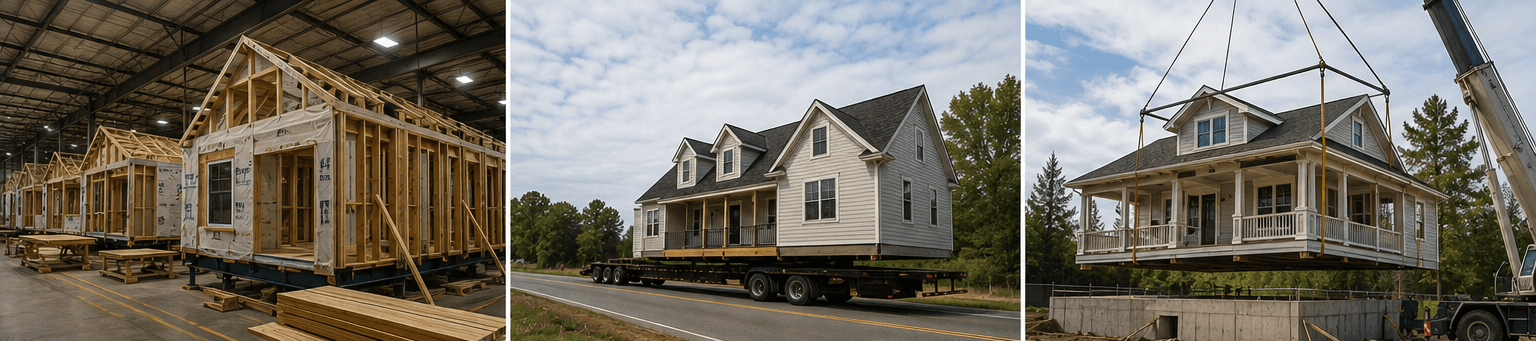
Prefab, Modular, or Manufactured? What's the Difference — and Who Cares?
How many times have you heard someone use "prefab," "modular," and "manufactured" like they're interchangeable — a lender, a listing agent, a contractor, even a city inspector?
Fair question if you've never had to care: does it actually matter which word gets used? It does — and it matters more right now than it did six months ago.
Why this matters now
Congress just passed the 21st Century ROAD to Housing Act, signed into law July 11, 2026. Buried in Title III is a change that rewrites one of the oldest rules in factory-built housing: manufactured homes no longer have to be built on a permanent steel chassis. That requirement had been in place since the federal HUD Code was created in 1976 — it's the single biggest structural change to manufactured housing regulation in decades, and it's happening right now, with states given until July 2027 (2028 for states with biennial legislatures) to update their own laws to match. If you're evaluating factory-built housing on any timeline in the next two years, the ground is actively shifting under the category — literally.
That makes this the wrong moment to be fuzzy on what "manufactured" even means versus "modular" versus "prefab." These aren't three flavors of the same thing. They're three different regulatory categories, each with its own building code, its own financing rules, and its own zoning treatment. Mixing them up isn't a vocabulary problem — it's the kind of gap that shows up later as a rejected loan, a lower-than-expected appraisal, or a property you ruled out (or didn't) based on the wrong assumption.
Here's what each one actually is, and why the distinction is worth five minutes of your attention.
"Prefab" isn't a real category
It's industry shorthand — a catch-all for anything built off-site and assembled on location. It carries no legal weight. Nobody finances a "prefab loan" or zones for "prefab districts." If someone tells you a home is prefab, your next question should be: modular, or manufactured? Because that's the distinction that actually determines what happens next.
Modular: built to the same code as the house next door
A modular home is built in sections in a factory, then transported and assembled on a permanent foundation at the final site. The part that matters: it's built to the same state and local building code as site-built construction — the IRC or IBC, whichever your jurisdiction has adopted. A local inspector signs off on it exactly like they would stick-built framing. Once assembled, it's real property. It finances like real property, appraises like real property, and — in most jurisdictions — is zoned like real property. The ROAD Act doesn't touch this category at all; modular was never built on a chassis to begin with.
Manufactured: the category Congress just changed
A manufactured home is governed by an entirely separate standard — the federal HUD Code. Until this year, HUD Code homes had to be built on a permanent steel chassis, a rule left over from the code's origins in mobile home construction. That's the requirement the ROAD Act just made optional. HUD still has to issue updated construction and safety standards to implement the change, and until a state formally certifies that it treats chassis-free and chassis-built manufactured homes identically, chassis-free homes aren't permitted there at all. This is actively in motion — not a settled fact you can assume applies everywhere yet, and not something to take for granted even a year from now.
Financing is where this category diverges hardest from modular. Manufactured homes are often financed as personal property — a chattel loan — unless the home and land are titled together as real estate, which can open the door to a conventional or FHA mortgage instead.
So — who cares?
Anyone deciding what to build, buy, finance, or approve on a specific piece of land, especially over the next 12–24 months while this law rolls out state by state. The classification determines the loan product, the appraisal approach, and — this is the one that trips people up most — whether it's even allowed on the lot in question. Zoning codes regulate by construction method, not appearance. Plenty of municipal codes still carry decades-old language restricting "manufactured homes" — sometimes literally still labeled "mobile homes" — to designated MH districts, while modular gets treated the same as anything site-built. That split is inconsistent from one jurisdiction to the next, and right now the manufactured side specifically is a moving target because of the certification deadline.
There's also a stigma tax being paid here that mostly belongs to one category, not all three. "Trailer home" describes the pre-1976 era — before there was any federal code governing this kind of construction. Everything built since has to meet a real, enforced engineering standard. A modern multi-section manufactured home is often indistinguishable from site-built at the curb. Modular never carried this stigma to begin with, since it's always been built to the same code as everything around it. Most people just never learned the categories were separate — and now one of them is being actively rewritten while the other stands still.
The takeaway
Prefab tells you nothing. Modular and manufactured are the two words that actually matter, and one of them just had its core federal rule changed for the first time in fifty years. Before you rule a property in or out because of what's built on it, it's worth confirming which category you're actually looking at — and, for manufactured specifically, whether your state has caught up yet.
IQLand
AI-powered land development intelligence platform
Related Posts
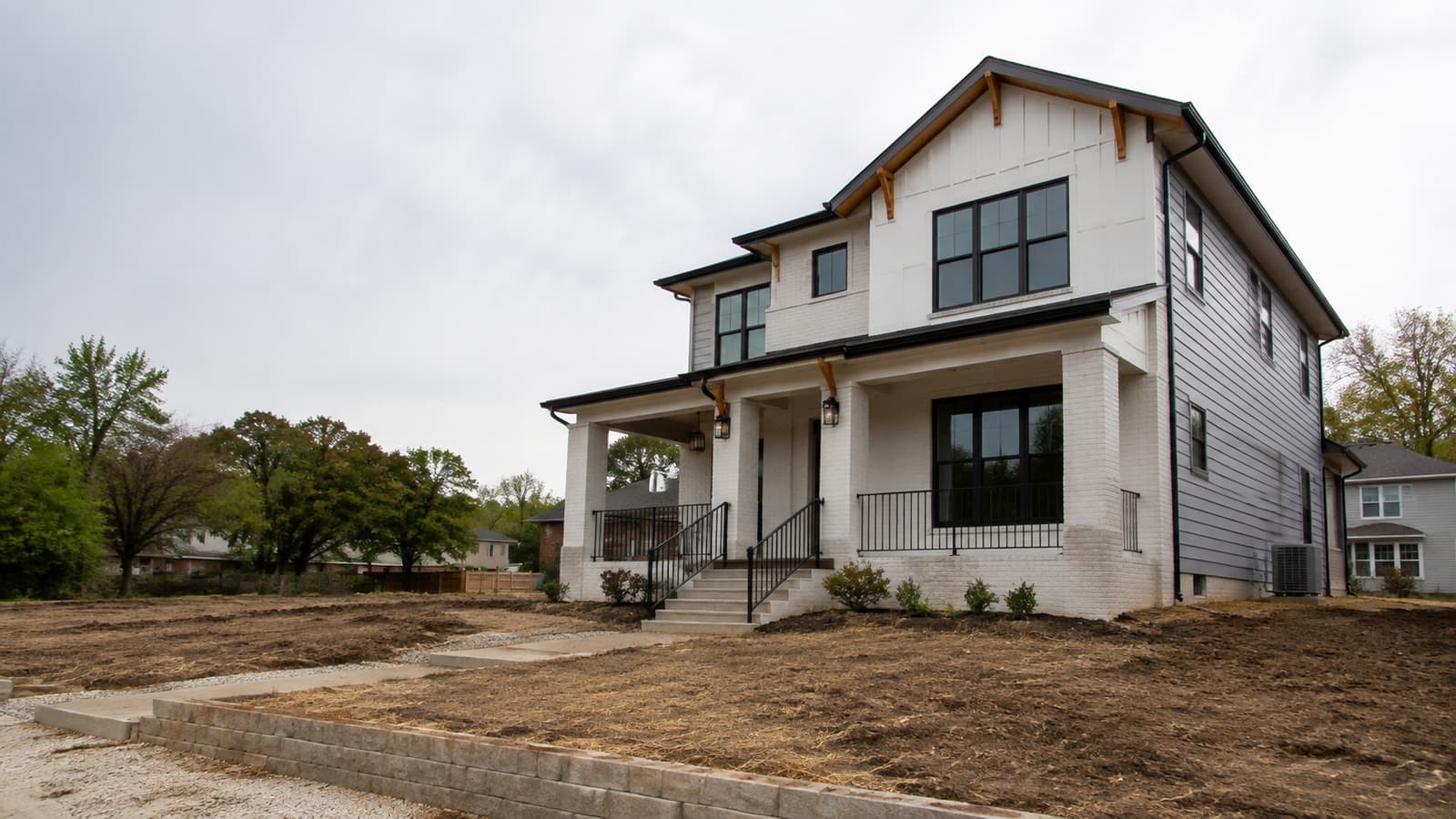
The East Point District Where the Floor-Area Bar Nearly Doubles
East Point's R-3 district requires nearly double the floor area of R-1A on a comparably sized lot.
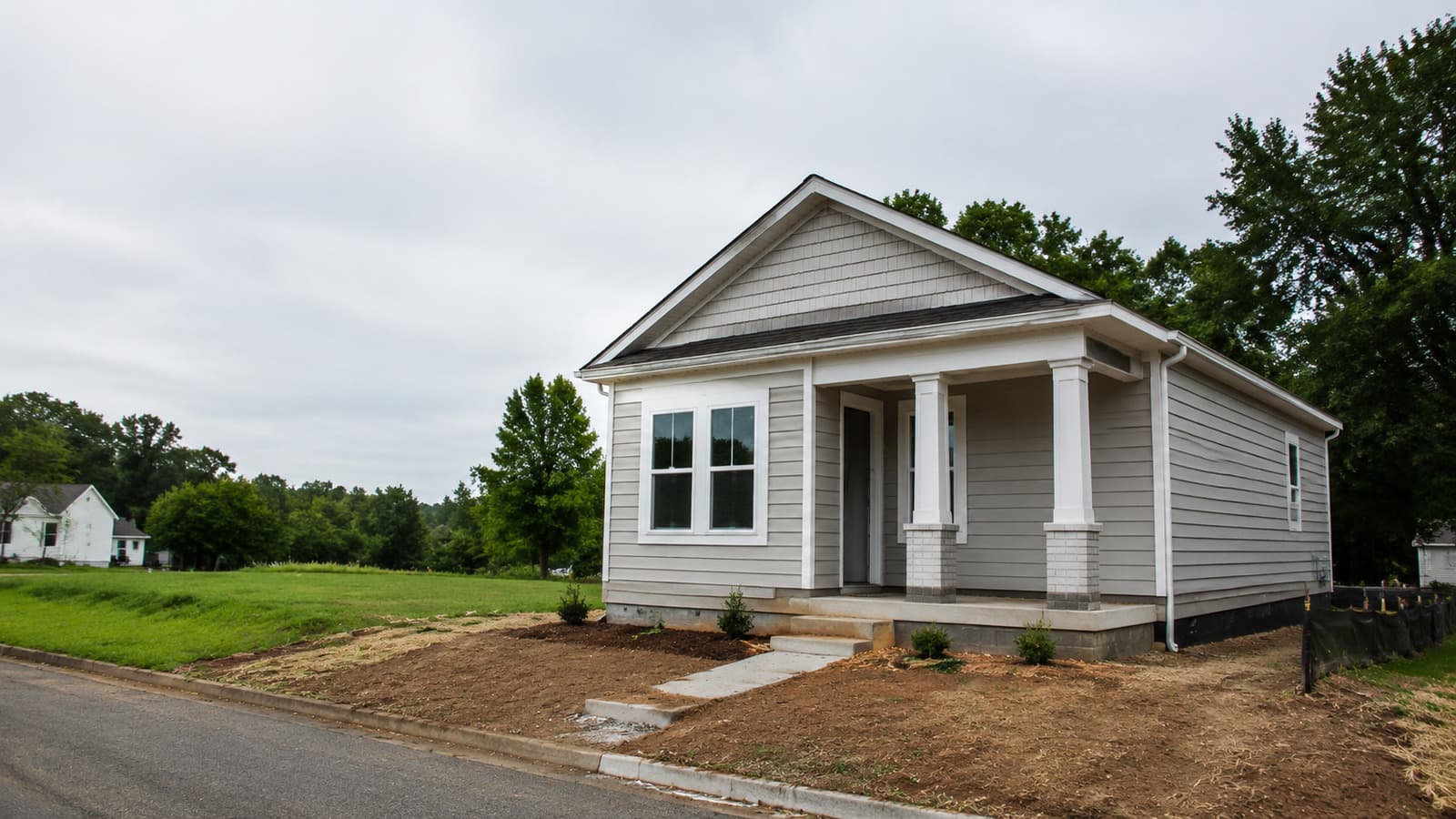
The Smaller East Point District With Its Own Floor-Area Math
East Point's R-1A district allows a smaller ground floor than R-1 next door — mixing the two up fails plan review.
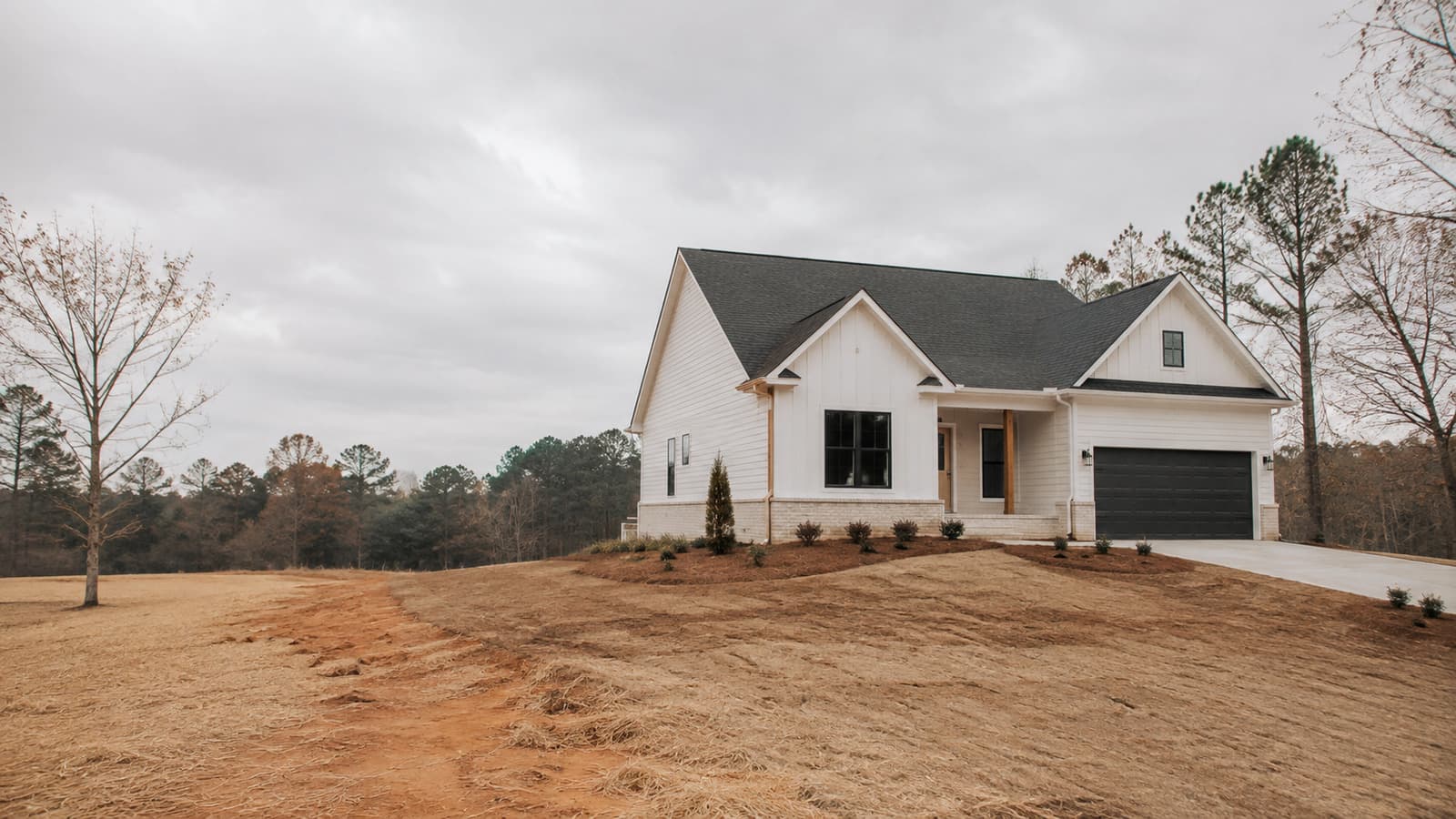
Why Total Square Footage Isn't the Number That Matters in East Point
In East Point's R-1 district, the minimum floor area depends on how it's split between the ground floor and upper floors, not just the total.