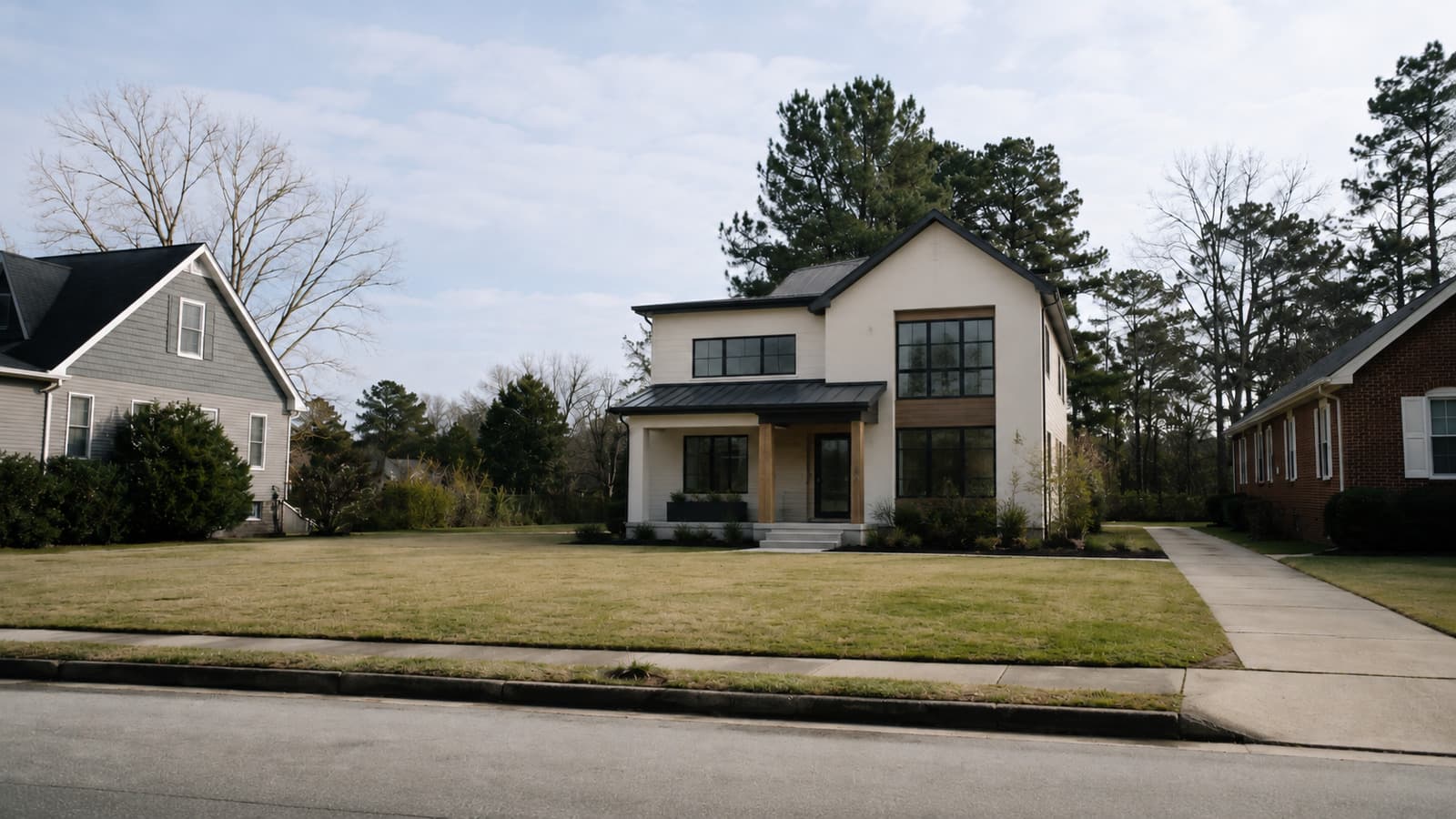
Why the Same House Plan Needs Three Different Front-Yard Answers in Marietta
How many times have you drawn up a site plan, only to find out weeks later that the setback you used was wrong — not because you misread the code, but because you checked the wrong line of it?
Most people who research a lot in Marietta pull up the zoning district, find the front setback number, and move on. It feels like a solved problem: one district, one number, one answer. That assumption is exactly where the time and money start to leak.
The Insight
In Marietta's R-1 residential district, the front setback isn't one number. It's three, depending on which kind of street the lot faces:
- 35 feet on a local street
- 40 feet on a collector street
- 50 feet on an arterial street
The same house plan, on the same size lot, in the same zoning district, needs a different front-yard answer depending on the street classification alone. A 15-foot swing between the smallest and largest number is not a rounding error — it can be the difference between a plan that fits and a plan that gets sent back.
Why This Happens
Street classification exists for traffic and infrastructure reasons that have nothing to do with the house itself — sight lines, right-of-way planning, future road widening. But because it's baked into the setback table rather than called out as its own line item, it's easy to miss. Most zoning summaries list "front setback: 35 ft" without the caveat, and most people take that at face value.
Application
Before a site plan is drawn, the street classification for the specific parcel needs to be confirmed — not assumed from the neighborhood, and not carried over from a similar-looking lot down the road. Two lots that look identical from the curb can sit on different street classes and require different setbacks.
This is exactly the kind of check that's easy to skip when time is tight, and exactly the kind of miss that turns into a resubmitted plan, a call to a civil engineer to confirm the number, or a design that has to be redrawn after the fact.
The IQLand Connection
This is the kind of detail IQLand's zoning intelligence surfaces automatically for a specific parcel — the applicable street classification and the resulting setback, without a manual lookup or a call to confirm it. The answer is there before the first professional visit, not after.
Closing Insight
The zoning code doesn't care how many houses you've built in a neighborhood before. Every lot gets checked on its own, because the street it fronts — not the neighborhood it sits in — decides the number that matters.
Know the street classification before you draw the plan, not after.
IQLand Team
AI-powered land development intelligence platform
Related Posts
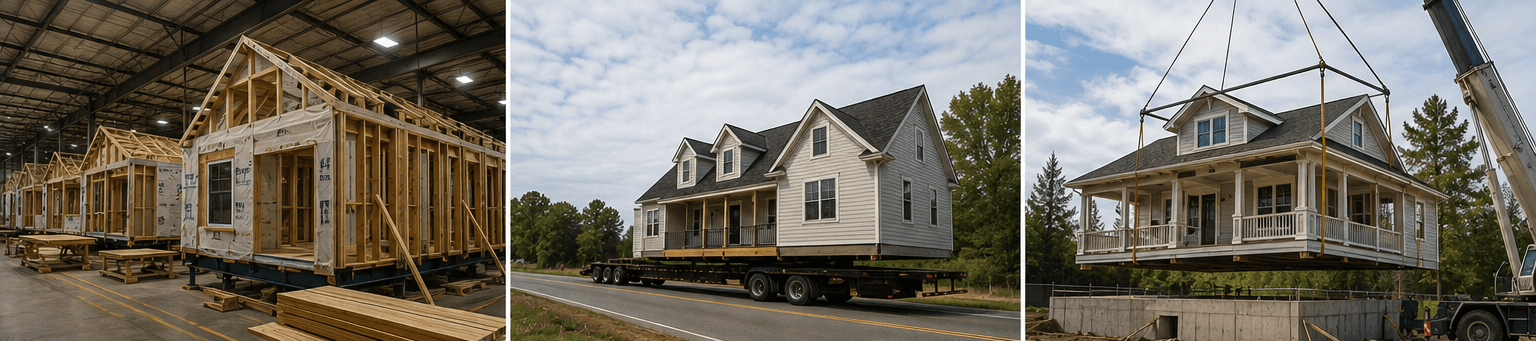
Prefab, Modular, or Manufactured? What's the Difference — and Who Cares?
Prefab, modular, and manufactured aren't interchangeable words. They're three regulatory categories with three different building codes, financing paths, and zoning treatments — and Congress just rewrote the rules for one of them.
The East Point District Where the Floor-Area Bar Nearly Doubles
East Point's R-3 district requires nearly double the floor area of R-1A on a comparably sized lot.
The Smaller East Point District With Its Own Floor-Area Math
East Point's R-1A district allows a smaller ground floor than R-1 next door — mixing the two up fails plan review.